
The Corridor of Life Forest: Protecting a Critical Amazon Forest Corridor
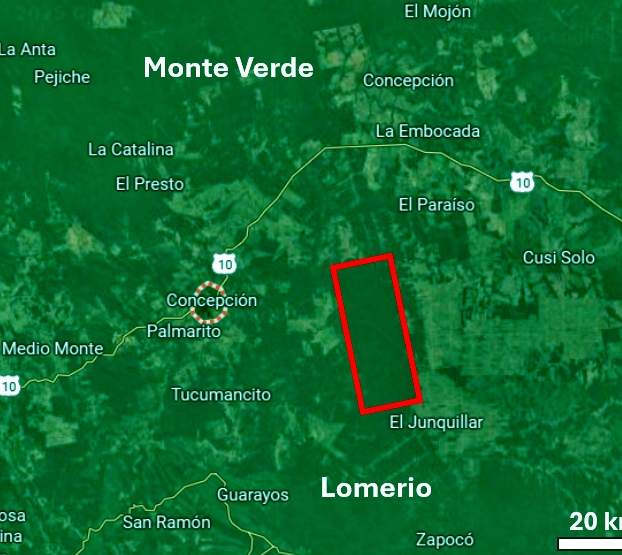
This 30,000-hectare forest is one of the most important ecological corridors in the Amazon region.
It plays a critical role in regional climate stability and biodiversity, and for the lives and livelihoods of surrounding communities, including major Indigenous Nations. Protecting this corridor is essential for the future of the region.
The Corridor of Life forest is the last remaining ecological corridor between the semi-dry forests of Chiquitania in the south and the more humid Amazon forests to the north.
If this forest disappears, many mammal species will lose one of the last remaining migration routes between these ecosystems. Seasonal movements between north and south would become significantly more difficult.
The forest also plays an important role in regulating the regional climate and water cycles. Changes in biodiversity and climate conditions would affect surrounding communities, including the Indigenous Nations of Lomerio and Monte Verde.
If the forest is converted into large-scale industrial agriculture, the loss would be effectively irreversible. The Corridor of Life is therefore a key area for biodiversity and climate stability across in the Amazon.
The forest has recently been sold to a Brazilian agribusiness company. However, according to an existing court ruling, conversion of the forest into agricultural land is illegal under Bolivian law.
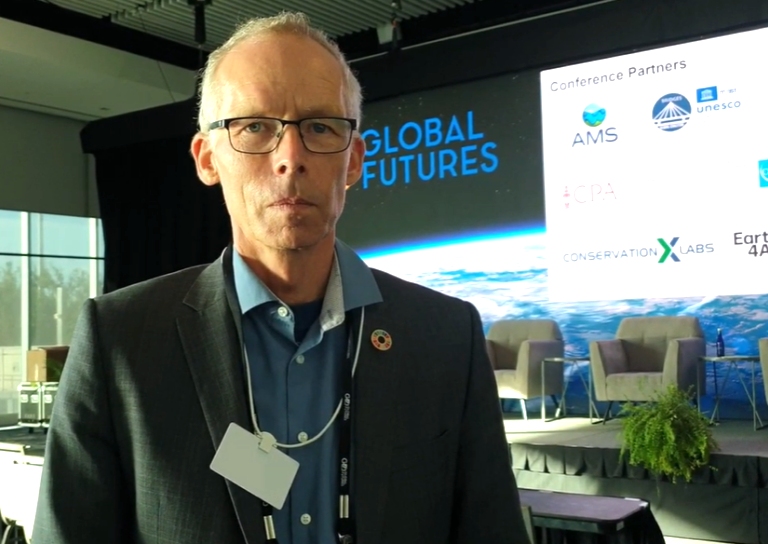
Professor Johan Rockström says about the Corridor of Life forest:
“The loss of this forest would lead to accelerated degradation and drought in Chiquitania, which would risk leading to negative effects on other parts of the Amazon rainforest and affect water supply for communities downwind.
“If we lose the forests along the southeastern borders of the rainforest, it will spill over into other parts of the Amazon forest, as well as affect the freshwater supply further south (through “atmospheric rivers”). So, the consequences could be large and permanent.”
Professor Dr Johan Rockström is well-regarded as the Director of the Potsdam Institute for Climate Impact Research. With over 25 years of experience working within the sustainability industry, his vast research findings have been shared with audiences in his publication ‘Breaking Boundaries: The Science Behind Our Planet’.
DEFENDING THE CORRIDOR OF LIFE:
The conversion of this forest into industrial agriculture is illegal under Bolivian law according to an existing court ruling.
Indigenous Nations in the surrounding areas are evaluating legal actions to defend this critical forest corridor connecting Chiquitania and the Amazon.
The 2022 Initiative Foundation supports efforts to document the ecological importance of the Corridor of Life and to support Indigenous communities working to defend their forests and territories.
WAYS TO KEEP THE FOREST STANDING:
There are viable ways to maintain the economic value of the forest while keeping it standing.
Through cooperation between local communities, Indigenous Nations, and responsible partners, forests like the Corridor of Life can generate sustainable value while remaining intact ecosystems and habitats for countless species.
Initiatives such as Amazonia 4.0 demonstrate how standing forests can create long-term economic value through sustainable bioeconomy models.